
If you’re evaluating a Mediterranean fast casual franchise, liking the food is a good place to start, but it shouldn’t be where your due diligence ends.
A strong franchise opportunity has to work on several levels. The menu needs to connect with consumers. The operating model has to make sense. There should be systems behind the franchisee, a thoughtful approach to territory and real estate, and a clear reason for customers to choose the brand once it enters a local market.
Why Mediterranean Fast Casual Deserves a Closer Look
When I first looked at The Great Greek Mediterranean Grill seven years ago, I wasn’t nearly as familiar with Mediterranean food as I am today. What caught my attention first wasn’t the franchise model. It was the consumer.
People were already looking for food that felt healthier and better for them, and I saw Mediterranean fitting naturally into that shift. Seven years later, I still believe that consumer preferences are creating momentum for the category.
That momentum is showing up in the restaurant landscape, too. According to Datassential’s 2026 restaurant industry data, Mediterranean cuisine posted 7.8% net unit growth over the prior 12 months, making it one of the fastest-growing cuisine types tracked.
Earlier in my career, I helped launch a better-burger concept, and I learned something interesting about the way people think about food. Certain categories can become an occasional choice. Someone may decide if they’ll have a burger once a week or once a month.
Mediterranean can fit differently into someone’s routine. A guest can have a salad with chicken for lunch, come back another day for a gyro or bowl, and choose from vegetables, proteins, grains, and other options depending on what they want that day.
But category momentum alone doesn’t make a franchise a good investment. If you’re comparing Mediterranean franchise opportunities, these are the five areas I’d investigate before making a decision.
1. Does the Menu Support More Than One Way to Serve Customers?
Start with what happens inside and outside the restaurant.
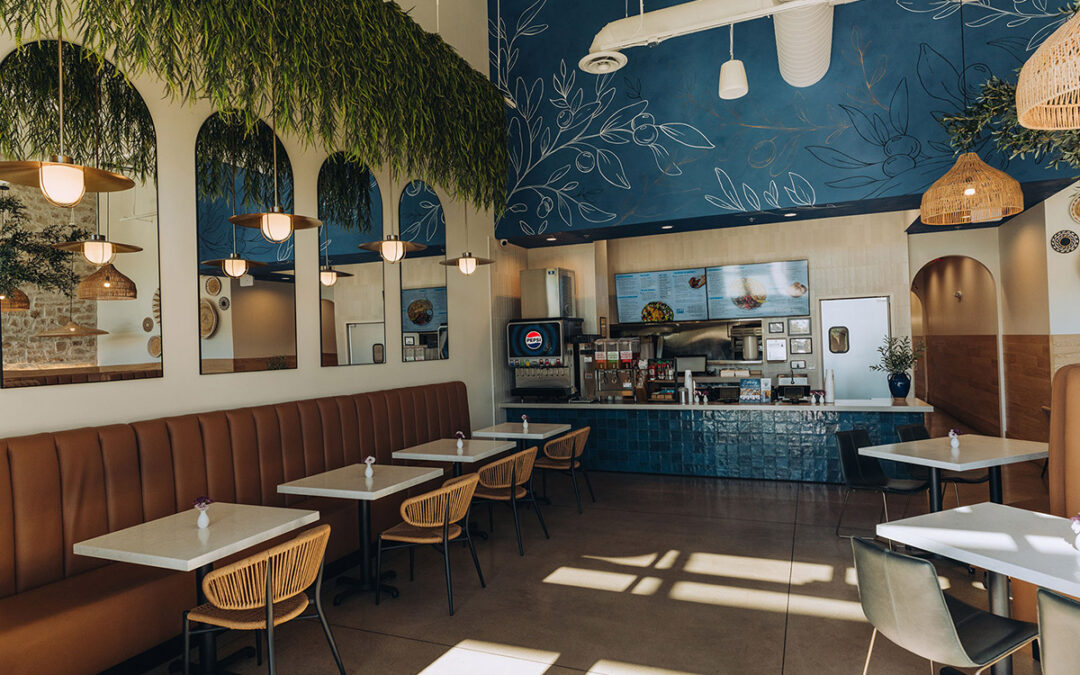
At The Great Greek Mediterranean Grill, the model is designed to serve customers both inside and outside the restaurant. We don’t need a 3,500- or 4,000-square-foot space to do that. Our restaurants can operate with a more compact footprint while supporting dine-in, takeout, delivery, and catering. Because the food also travels well, those off-premise occasions can be a natural extension of the business rather than an afterthought.
Menu depth matters here, too.
Mediterranean food can appeal to different preferences within the same group. Someone may be looking for a protein-forward meal, while someone else wants vegetarian or gluten-free options. A prospect should look at whether the menu gives customers enough variety to create different occasions for the brand.
When evaluating any restaurant franchise, ask: Where can the business come from besides the dining room?
2. What Kind of Franchise System Is Behind the Restaurant?
The restaurant is what the customer sees. The franchise system behind it is what an owner needs to understand.
Prospects should look closely at how the concept is operated, how franchisees and their teams are trained, and what resources exist after opening.
For us, that starts with an operating system designed to be efficient and teachable. Our menu is intentionally straightforward to execute, which allows us to focus our training on consistency, hospitality, leadership, and running the business well.
There’s also a larger infrastructure behind The Great Greek Mediterranean Grill.
We’re part of United Franchise Group (UFG), an organization with decades of franchising experience and resources that extend beyond one restaurant brand. That became particularly valuable as The Great Greek Mediterranean Grill expanded internationally because UFG already had experience and support infrastructure in markets around the world.
A prospect evaluating a franchise should ask what exists beyond the initial training period.
Who helps with operations? What resources are available as you prepare to open? What happens when you have a question six months or two years into ownership?
Those are questions I’d expect an established franchise system to be able to answer.
3. Is the Territory Available, and Does the Market Actually Make Sense?
Seeing an open territory on a map doesn’t mean your market research is finished.
Hudson Bohan, our Business Development Manager, talks with prospective owners about this regularly. As he puts it, “availability is only the first step.”
Beyond whether a territory is open, prospects should examine demographics, population growth, competition, real estate opportunities, and whether the market appears capable of supporting the business over time.
At The Great Greek Mediterranean Grill, that evaluation is data-driven. The team can look at factors including population, growth trends, traffic patterns, competition, and future development opportunities so a prospective franchisee can understand both the immediate market and its longer-term potential.
That distinction matters.
“Is this territory available?” is a yes-or-no question.
“Why does this territory make sense for this concept?” requires much more investigation.
That’s the distinction I’d want to understand before making a territory decision.
4. What Does Site Selection and Real Estate Support Look Like?
Once you identify a market, the next question is where the restaurant should actually go.
Real estate can have a major effect on a restaurant’s business, so I’d want to understand the franchisor approach before signing.
Hudson recommends that prospects ask what a successful location for the concept looks like. That means going beyond square footage and looking at factors such as visibility, traffic, access, parking, lease terms, and how comparable locations perform in similar types of markets.
You should also understand what support the franchisor provides.
Our in-house real estate team can research markets, review potential sites, look at opportunities that are currently available or may be coming to market, and help guide the location-approval process. The franchisee is still making an important business decision, but they’re not expected to evaluate every piece of market and site data without support.
When you’re comparing fast casual franchise opportunities, ask:
What does the brand consider a strong site? Who helps identify it? What data goes into that decision? And what happens between selecting a territory and signing a lease?
Those answers tell you a lot about the system you’re considering joining.
5. Can the Brand Differentiate Itself in the Local Market?
This is one of the areas I think restaurant operators sometimes underestimate.
You can find the right site, build a beautiful restaurant, and have excellent systems. Customers still need a reason to come in and a reason to come back.
For The Great Greek Mediterranean Grill, our guests consistently bring us back to one thing first: flavor.
But I don’t think restaurant differentiation stops with food.
I think about the experience in three parts: the food experience, the service experience, and the ambient experience. The last one is easy to overlook. It’s the smell of the food when someone walks in, the music, the pace of the restaurant, the friendliness of the team, and the overall feeling guests get while they’re there.
For me, the opportunity is when all three of those pieces work together.
That’s especially important in Mediterranean fast casual. It’s not enough to put familiar menu items on a board and assume the category itself will differentiate you. A prospect should understand what makes the concept memorable in a market where consumers have plenty of choices.
Ask the franchisor what the customer experience is supposed to feel like, why guests choose the brand, and how franchisees are expected to deliver that experience consistently.
How to Evaluate a Mediterranean Franchise Before You Invest
One thing I appreciate about well-prepared franchise prospects is that they don’t evaluate an opportunity from only one direction.
Hudson sees that in his conversations with candidates. The strongest prospects review the Franchise Disclosure Document (FDD), research their own market, and ask detailed questions about operations, the business model, and the brand’s long-term direction. Visiting a restaurant and trying the food are important, but well-prepared prospects are evaluating the whole business opportunity at the same time.
There also needs to be alignment between the person and the brand.
When we talk with prospective Great Greek Mediterranean Grill franchisees, I care about whether they’re passionate about hospitality and delivering a great guest experience. I also want to understand their business background. Have they built teams? Have they led people? Can they operate and grow a business?
Restaurant experience can be helpful, but it isn’t the only thing that determines fit. The person matters.
If you’re comparing a Mediterranean fast casual franchise opportunity, I’d come back to these five questions:
- Does the menu support dine-in, takeout, delivery, catering, and different customer preferences?
- Is there an established franchise system with training and ongoing support behind the brand?
- Does the available territory make sense based on the market, not simply because it’s open?
- What real estate and site-selection support will you receive?
- Does the brand have a clear way to differentiate itself and create a memorable local customer experience?
Those questions will tell you much more than whether you enjoyed your last meal.
And yes, I absolutely think you should experience the restaurant and taste the food. That’s something we ask our prospects to do.
Just make sure your evaluation doesn’t stop there.
If you’re exploring whether The Great Greek Mediterranean Grill fits the criteria you’re looking for in a restaurant franchise, learn more about the franchise opportunity, our training and support, and available territories to continue your due diligence.