
Building a restaurant franchise portfolio is different from simply opening more restaurants. Once you move beyond one location, the questions change. You have to think about whether the concept is repeatable, whether your leadership team can grow with you, how your locations fit together across a market or multiple markets, and whether the franchisor has the systems to support continued expansion. For operators thinking about a multi-unit restaurant franchise, those questions matter just as much as the food.
I’ve looked at this from both sides of the table. Before leading The Great Greek Mediterranean Grill, I spent seven years as a multi-unit and multi-brand restaurant franchisee. I built about eight restaurants and managed roughly 300 employees. That experience changed the way I look at growth because operating several restaurants isn’t the same job as operating one.
The first restaurant teaches you the business. Building a portfolio teaches you how to build an organization.
What Changes When You Go From One Restaurant to a Multi-Unit Portfolio?
When you own one restaurant, you can stay very close to almost everything happening inside it. You know the managers, the staffing issues, the local marketing calendar, the guest feedback, and the operational problems that need attention.
As you add locations, your role starts to shift. You still need visibility into operations, marketing, people, and financial performance, but you can’t personally handle every decision the same way anymore.
That’s the difference between owning several restaurants and building a true restaurant franchise portfolio. The goal is to create a structure that can support multiple strong restaurants without every location depending on you personally.
How Does a Multi-Unit Franchise Investment Change the Financial Math?
One advantage of multi-unit ownership is that you’re not starting over every time you open another restaurant.
By the time an operator has run the first location successfully, they’ve already learned the operating system, trained managers, developed vendor relationships, built local awareness, and gained a much better understanding of the market. That experience and infrastructure can become the foundation for the restaurants that follow.
Marketing can also work differently once you have several restaurants in a market. Instead of building awareness around one address, your local marketing can support a broader footprint. Catering relationships, community partnerships, digital campaigns, and local brand recognition can potentially benefit more than one location.
Then there’s the people side of the business. A growing portfolio can create more opportunities for strong employees to move into management and leadership roles. That matters because if you want to expand a restaurant franchise beyond one or two locations, you’re eventually going to need managers who can become leaders and leaders who can help develop the next restaurant.
Territory strategy becomes more important too. A multi-unit investor isn’t simply looking for another good site. You’re thinking about how restaurants fit together across a metro area, where the customer base is growing, and how to develop a market without creating unnecessary overlap. Multi-unit development agreements can establish the development area, schedule, and terms for additional locations, with the current FDD and agreement governing the actual rights and requirements.
As the portfolio grows, the long-term value of the business can become part of the strategy too, although any future valuation depends on the actual performance of the restaurants, market conditions, and the applicable franchise agreements.
That’s how I’d think about a multi-unit franchise investment: not as several copies of the same investment, but as a business that becomes more interconnected as it grows.
What Makes a Restaurant Concept Portfolio-Worthy?
Before adding any restaurant concept to a portfolio, I’d start with one basic question: can this business be repeated without depending on one exceptional person being in the building every day?
Consistency becomes more important with every unit you add. The recipes need to be teachable, the operating procedures need to work, and training has to give teams a clear path from learning the system to executing it consistently.
Operational flexibility matters, too. We’ve seen The Great Greek work across different formats, from traditional suburban restaurants to more flexible footprints, without changing what the guest should expect from the brand.
And finally, the demand has to travel. A concept might work very well in one neighborhood, but a portfolio operator needs to think about whether the food, value proposition, and experience can translate across multiple trade areas.
Why Can Mediterranean Fast Casual Fit a Multi-Unit Restaurant Portfolio?
One thing I like about Mediterranean fast casual is that the customer isn’t limited to only dining in the restaurant.
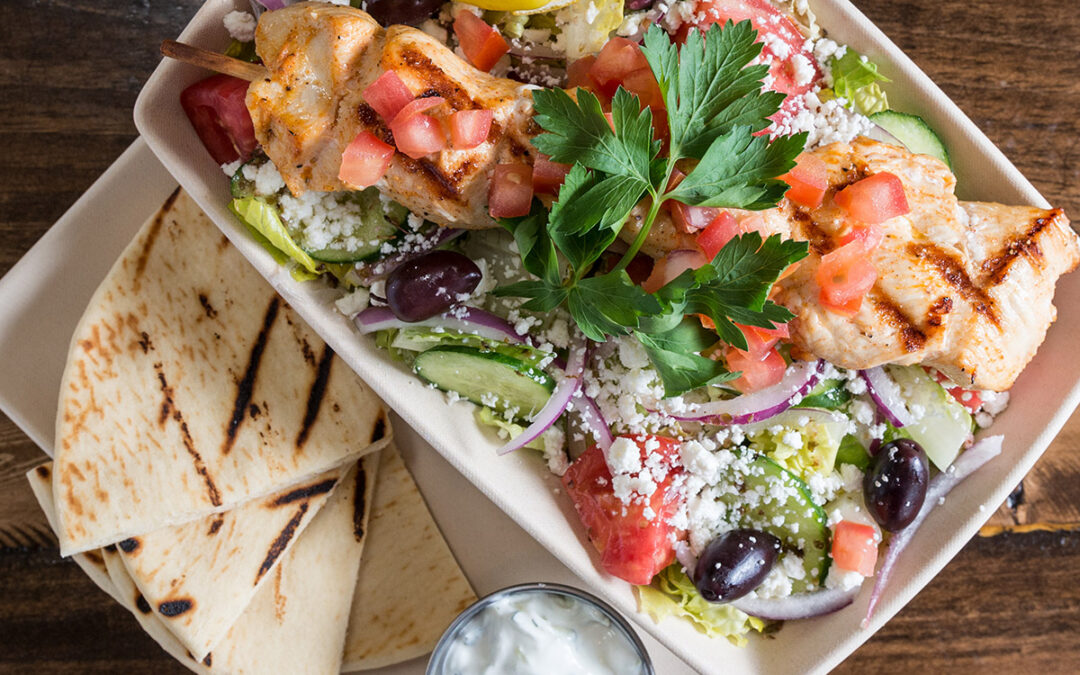
At The Great Greek, guests can dine in, order takeout, use delivery, or cater a meeting or event. The menu also travels well, which matters when off-premise business is an important part of the model.
The menu can also serve different preferences within the same group. You may have one guest looking for a protein-forward meal, another looking for a vegetarian option, and someone else looking for gluten-sensitive options. That versatility gives you more ways to fit into different dining occasions with one restaurant concept.
Catering adds another layer. In 2025, The Great Greek reported a 63% increase in catering sales, which is meaningful because catering can extend the business beyond the four walls of the restaurant and create relationships with offices, organizations, and local groups.
From a portfolio standpoint, that matters. You’re not building several restaurants that depend only on filling dining rooms for lunch and dinner. You’re building locations that can serve customers across multiple channels and occasions.
Nearly half of our recent unit growth has come from existing franchise owners. To me, that matters because those are operators who already know the business firsthand and are choosing to grow with us.
What Changes Operationally as You Add Locations?
The biggest operational shift in multi-unit ownership is that you have to stop being the answer to every question.
At one restaurant, you may be able to see nearly everything happening in real time. At three or five, you need managers who understand the standards, know what they’re accountable for, and can lead their own teams. You also need ways to compare performance across locations, so you can identify where a restaurant needs support before a small issue becomes a larger one.
That was one of the biggest lessons I took from being a franchise operator. The day-to-day work changes as the business gets larger, but leadership becomes even more important. You’re still trying to deliver a great guest experience. You’re just doing it increasingly through the people you’ve developed.
For somebody considering unit two or three, I’d spend as much time thinking about the management bench as I would think about the next piece of real estate.
How Does The Great Greek Support Franchisees Scaling from One Unit to Multiple Locations?
As a franchisee grows, support shouldn’t become less important. In many ways, it becomes more important because the decisions are getting larger.
Real estate is a good example. When you’re developing several restaurants, you’re no longer asking only whether one site is good. You’re thinking about how the overall market should be developed. Our real estate resources can help research markets, review potential sites, examine demographic and competitive information, and guide franchisees through the site-approval process.
The same applies to training and operations. The Great Greek provides training before opening, field support during the launch process, and ongoing operational resources afterward.
One of our priorities as a brand is building a team around franchisee support and strong unit-level economics. That infrastructure matters whether somebody owns their first Great Greek or is working on their fifth.
For someone exploring our multi-unit opportunities, the goal is to understand not only how to open additional restaurants, but how our team can help you plan and operate a larger business.
What Does Multi-Unit Growth Look Like for a Great Greek Franchisee?
Kevin Carmean is a good example of how that progression can happen.
What initially interested Kevin about franchising was scalability. He was drawn to restaurant concepts that could grow and expand, and after discovering The Great Greek, he saw an opportunity to build around the concept.
He became a franchise owner in 2019 and has since grown his presence in the Orlando market. His Celebration restaurant became his fifth Great Greek location in the area, and he has talked about the importance of maintaining the same food quality and hospitality as the portfolio expands.
That’s the part of multi-unit growth that I think sometimes gets overlooked. Expansion is not simply about opening doors faster. The real test is whether the fifth restaurant can deliver the same kind of experience the first restaurant was built around.
Mike Fardous, one of our Michigan franchise owners, has also talked about the importance of the leadership team behind the franchise and being able to reach the brand when support is needed.
Those two perspectives connect to the same idea: multi-unit growth works best when the operator is building their own leadership organization while still having a franchise system behind them.
Is Multi-Unit Restaurant Ownership Right for You?
Multi-unit ownership isn’t simply the next step because the first restaurant is doing well. The better question is whether you’re prepared to lead a larger business.
Can you develop managers, maintain standards across locations, and make strategic decisions without personally managing every shift? Do you have the financial capacity and organizational discipline to keep developing?
When we evaluate franchise candidates, we look for people who care about hospitality, understand business, and have experience building and leading teams. Those qualities become even more important when you’re building a restaurant franchise portfolio.
Building a Portfolio, Not Just Opening More Restaurants
A strong restaurant portfolio isn’t created by repeating the same investment several times. It’s built by choosing a concept that can be replicated, developing leaders, understanding the market, maintaining operational discipline, and having a franchise system capable of supporting continued growth.
For operators who want to build beyond one restaurant, The Great Greek combines a multi-channel Mediterranean fast-casual model with established training, operational support, real estate resources, and formal multi-unit development opportunities.
If you’re evaluating your next restaurant investment or considering a multi-unit development strategy, explore The Great Greek’s multi-unit opportunities, review the turnkey investment, learn more about our ideal franchise candidate, and connect with our franchise development team to discuss your market.