
Building a Restaurant Franchise Portfolio: The Case for Multi-Unit Mediterranean

Building a Restaurant Franchise Portfolio: The Case for Multi-Unit Mediterranean

Building a restaurant franchise portfolio is different from simply opening more restaurants. Once you move beyond one location, the questions change. You have to think about whether the concept is repeatable, whether your leadership team can grow with you, how your locations fit together across a market or multiple markets, and whether the franchisor has the systems to support continued expansion. For operators thinking about a multi-unit restaurant franchise, those questions matter just as much as the food.

I’ve looked at this from both sides of the table. Before leading The Great Greek Mediterranean Grill, I spent seven years as a multi-unit and multi-brand restaurant franchisee. I built about eight restaurants and managed roughly 300 employees. That experience changed the way I look at growth because operating several restaurants isn’t the same job as operating one.

The first restaurant teaches you the business. Building a portfolio teaches you how to build an organization.

What Changes When You Go From One Restaurant to a Multi-Unit Portfolio?

When you own one restaurant, you can stay very close to almost everything happening inside it. You know the managers, the staffing issues, the local marketing calendar, the guest feedback, and the operational problems that need attention.

As you add locations, your role starts to shift. You still need visibility into operations, marketing, people, and financial performance, but you can’t personally handle every decision the same way anymore.

That’s the difference between owning several restaurants and building a true restaurant franchise portfolio. The goal is to create a structure that can support multiple strong restaurants without every location depending on you personally.

How Does a Multi-Unit Franchise Investment Change the Financial Math?

One advantage of multi-unit ownership is that you’re not starting over every time you open another restaurant.

By the time an operator has run the first location successfully, they’ve already learned the operating system, trained managers, developed vendor relationships, built local awareness, and gained a much better understanding of the market. That experience and infrastructure can become the foundation for the restaurants that follow.

Marketing can also work differently once you have several restaurants in a market. Instead of building awareness around one address, your local marketing can support a broader footprint. Catering relationships, community partnerships, digital campaigns, and local brand recognition can potentially benefit more than one location.

Then there’s the people side of the business. A growing portfolio can create more opportunities for strong employees to move into management and leadership roles. That matters because if you want to expand a restaurant franchise beyond one or two locations, you’re eventually going to need managers who can become leaders and leaders who can help develop the next restaurant.

Territory strategy becomes more important too. A multi-unit investor isn’t simply looking for another good site. You’re thinking about how restaurants fit together across a metro area, where the customer base is growing, and how to develop a market without creating unnecessary overlap. Multi-unit development agreements can establish the development area, schedule, and terms for additional locations, with the current FDD and agreement governing the actual rights and requirements.

As the portfolio grows, the long-term value of the business can become part of the strategy too, although any future valuation depends on the actual performance of the restaurants, market conditions, and the applicable franchise agreements.

That’s how I’d think about a multi-unit franchise investment: not as several copies of the same investment, but as a business that becomes more interconnected as it grows.

What Makes a Restaurant Concept Portfolio-Worthy?

Before adding any restaurant concept to a portfolio, I’d start with one basic question: can this business be repeated without depending on one exceptional person being in the building every day?

Consistency becomes more important with every unit you add. The recipes need to be teachable, the operating procedures need to work, and training has to give teams a clear path from learning the system to executing it consistently.

Operational flexibility matters, too. We’ve seen The Great Greek work across different formats, from traditional suburban restaurants to more flexible footprints, without changing what the guest should expect from the brand.

And finally, the demand has to travel. A concept might work very well in one neighborhood, but a portfolio operator needs to think about whether the food, value proposition, and experience can translate across multiple trade areas.

Why Can Mediterranean Fast Casual Fit a Multi-Unit Restaurant Portfolio?

One thing I like about Mediterranean fast casual is that the customer isn’t limited to only dining in the restaurant.

At The Great Greek, guests can dine in, order takeout, use delivery, or cater a meeting or event. The menu also travels well, which matters when off-premise business is an important part of the model.

The menu can also serve different preferences within the same group. You may have one guest looking for a protein-forward meal, another looking for a vegetarian option, and someone else looking for gluten-sensitive options. That versatility gives you more ways to fit into different dining occasions with one restaurant concept.

Catering adds another layer. In 2025, The Great Greek reported a 63% increase in catering sales, which is meaningful because catering can extend the business beyond the four walls of the restaurant and create relationships with offices, organizations, and local groups.

From a portfolio standpoint, that matters. You’re not building several restaurants that depend only on filling dining rooms for lunch and dinner. You’re building locations that can serve customers across multiple channels and occasions.

Nearly half of our recent unit growth has come from existing franchise owners. To me, that matters because those are operators who already know the business firsthand and are choosing to grow with us.

What Changes Operationally as You Add Locations?

The biggest operational shift in multi-unit ownership is that you have to stop being the answer to every question.

At one restaurant, you may be able to see nearly everything happening in real time. At three or five, you need managers who understand the standards, know what they’re accountable for, and can lead their own teams. You also need ways to compare performance across locations, so you can identify where a restaurant needs support before a small issue becomes a larger one.

That was one of the biggest lessons I took from being a franchise operator. The day-to-day work changes as the business gets larger, but leadership becomes even more important. You’re still trying to deliver a great guest experience. You’re just doing it increasingly through the people you’ve developed.

For somebody considering unit two or three, I’d spend as much time thinking about the management bench as I would think about the next piece of real estate.

How Does The Great Greek Support Franchisees Scaling from One Unit to Multiple Locations?

As a franchisee grows, support shouldn’t become less important. In many ways, it becomes more important because the decisions are getting larger.

Real estate is a good example. When you’re developing several restaurants, you’re no longer asking only whether one site is good. You’re thinking about how the overall market should be developed. Our real estate resources can help research markets, review potential sites, examine demographic and competitive information, and guide franchisees through the site-approval process.

The same applies to training and operations. The Great Greek provides training before opening, field support during the launch process, and ongoing operational resources afterward.

One of our priorities as a brand is building a team around franchisee support and strong unit-level economics. That infrastructure matters whether somebody owns their first Great Greek or is working on their fifth.

For someone exploring our multi-unit opportunities, the goal is to understand not only how to open additional restaurants, but how our team can help you plan and operate a larger business.

What Does Multi-Unit Growth Look Like for a Great Greek Franchisee?

Kevin Carmean is a good example of how that progression can happen.

What initially interested Kevin about franchising was scalability. He was drawn to restaurant concepts that could grow and expand, and after discovering The Great Greek, he saw an opportunity to build around the concept.

He became a franchise owner in 2019 and has since grown his presence in the Orlando market. His Celebration restaurant became his fifth Great Greek location in the area, and he has talked about the importance of maintaining the same food quality and hospitality as the portfolio expands.

That’s the part of multi-unit growth that I think sometimes gets overlooked. Expansion is not simply about opening doors faster. The real test is whether the fifth restaurant can deliver the same kind of experience the first restaurant was built around.

Mike Fardous, one of our Michigan franchise owners, has also talked about the importance of the leadership team behind the franchise and being able to reach the brand when support is needed.

Those two perspectives connect to the same idea: multi-unit growth works best when the operator is building their own leadership organization while still having a franchise system behind them.

Is Multi-Unit Restaurant Ownership Right for You?

Multi-unit ownership isn’t simply the next step because the first restaurant is doing well. The better question is whether you’re prepared to lead a larger business.

Can you develop managers, maintain standards across locations, and make strategic decisions without personally managing every shift? Do you have the financial capacity and organizational discipline to keep developing?

When we evaluate franchise candidates, we look for people who care about hospitality, understand business, and have experience building and leading teams. Those qualities become even more important when you’re building a restaurant franchise portfolio.

Building a Portfolio, Not Just Opening More Restaurants

A strong restaurant portfolio isn’t created by repeating the same investment several times. It’s built by choosing a concept that can be replicated, developing leaders, understanding the market, maintaining operational discipline, and having a franchise system capable of supporting continued growth.

For operators who want to build beyond one restaurant, The Great Greek combines a multi-channel Mediterranean fast-casual model with established training, operational support, real estate resources, and formal multi-unit development opportunities.

If you’re evaluating your next restaurant investment or considering a multi-unit development strategy, explore The Great Greek’s multi-unit opportunities, review the turnkey investment, learn more about our ideal franchise candidate, and connect with our franchise development team to discuss your market.

The Great Greek Goes Global: What the Caribbean Expansion Tells Us About Mediterranean Fast Casual’s International Momentum

The Great Greek Goes Global: What the Caribbean Expansion Tells Us About Mediterranean Fast Casual’s International Momentum

When I look at The Great Greek Mediterranean Grill’s expansion into the Caribbean, I see more than a new market. I see another opportunity to bring the food, hospitality and guest experience our customers love to more people around the world. 

That has always been one of the most exciting parts of this brand. Whether someone visits us in the United States, Canada, Australia, Egypt or, soon, the Caribbean, the goal is the same: serve fresh, flavorful Mediterranean food in a way that makes people feel welcomed and excited to come back. 

The Great Greek recently signed a master franchise agreement with the Beharry Group to establish our presence in Guyana and seven countries throughout the Caribbean, including Antigua, Bahamas, Barbados, the Dominican Republic, Jamaica, Suriname, and Trinidad and Tobago. The first restaurant is expected to open in the fall of 2026 in Georgetown, Guyana’s capital and largest city. 

Why the Caribbean Makes Sense for The Great Greek 

The Caribbean market has several qualities that make it attractive for a brand like The Great Greek. There is strong recognition of U.S.-based brands throughout the region, often because of travel, tourism and cultural connection. That familiarity helps create awareness and interest when a proven restaurant concept enters the market. 

Guyana, specifically, represents an even bigger opportunity. The country is experiencing significant economic growth, and that momentum is creating demand for new dining options. As people have more opportunities and more disposable income, they are looking for restaurants that offer quality, consistency and a healthier way to enjoy great food. That growth also aligns with broader quick-service restaurant trends across Latin America and the Caribbean, where increased disposable income, urbanization and out-of-home dining demand are expected to support continued market expansion. 

That matters because The Great Greek is not simply entering a market with another quick-service option. We are bringing a premium fast casual experience built around fresh ingredients, grilled proteins, vibrant vegetables, house-made sauces and the hospitality our guests expect from us. 

The Caribbean also offers a strong cultural fit. Mediterranean food is approachable because so many people can identify with the ingredients and flavors. It feels fresh, satisfying, and familiar, while still offering something different from many traditional fast casual options in the market. 

Mediterranean Food Has Global Appeal 

One of the questions I get asked often is why Mediterranean cuisine travels so well across cultures. For a long time, I understood it instinctively because of the response we receive from guests and franchise candidates around the world. Last fall, that idea became even clearer to me. 

I was invited to speak at a Culinary Institute of America food conference focused on Mediterranean food. One of the presenters shared that 21 countries around the world consider Mediterranean food as part of their home cuisine. I thought that was remarkable, but it also made sense. 

As we talk to people across different markets, we find that so many cultures can identify with this food. The world is smaller than we sometimes think, and Mediterranean cuisine has a way of connecting across regions because it is rooted in simple, high-quality ingredients. 

People recognize grilled meats, rice, salads, fresh vegetables, pita, dips and bold flavors. They understand food that is prepared fresh and served with care. That gives The Great Greek an advantage when we look at international growth because we are not trying to introduce something unfamiliar. We are building on food traditions that already resonate with many parts of the world. 

The health message is also important. The Mediterranean diet has been recommended by the medical community for decades, and consumers continue to look for alternatives that feel better for them without sacrificing flavor or convenience. That consumer interest continues to be reinforced by national recognition, with U.S. News & World Report ranking the Mediterranean diet No. 1 in its Best Overall Diets rankings. 

That is where The Great Greek fits so naturally. Guests want food that tastes great, but they also want to feel good about what they are eating. Our menu gives them that opportunity. 

Why the Model Can Scale Internationally 

Cuisine is only part of the equation. For any international fast casual franchise, the operating model must be scalable, teachable and consistent. 

That is one of the strengths of The Great Greek Mediterranean Grill. 

Our restaurants do not require an overly large footprint or an unusually large team. We use simple, recognizable ingredients that come together to create food that is fresh, flavorful, and appealing. 

Our model also benefits from being part of United Franchise Group. United Franchise Group brings decades of franchising experience, global infrastructure and a team that already understands international development. We have resources in markets such as Australia and Europe, which makes international expansion a more natural transition for us than it might be for a typical restaurant brand at our stage of growth. 

For The Great Greek, the international interest has been very organic. Over the last several years, we have seen strong demand here in the United States, but we have also had people outside the country reach out after experiencing the brand or learning about the opportunity. Those conversations helped reinforce that the model has appeal beyond one market. 

What International Momentum Signals to Domestic Franchise Prospects 

International growth is exciting, but it also sends an important message to domestic franchise prospects. 

Everyone wants to be part of a winning team and a winning brand. When people see interest in The Great Greek across markets, it tells them there is energy behind the concept. It shows that the food, the business model and the guest experience are resonating. 

That does not happen by accident. 

The wind in the sails for this brand is the combination of terrific food and great hospitality. Guests are not only looking for something quick. They are looking for a better-for-you, premium fast casual experience that still feels convenient and approachable. 

That is one of the reasons I believe we are still early in our growth story. We are approaching 100 restaurants, which is a milestone many brands never reach. But from my perspective, we are just scratching the surface. We believe this brand has room to grow to 500 restaurants and beyond because the demand is there, the food is relevant and the model is built for scale. 

For domestic franchise prospects, our international momentum reinforces the strength of the opportunity. It shows that The Great Greek is not tied to one region or one narrow customer profile. The brand has a broader relevance because the food and experience match where consumer demand is moving. 

The Right Franchise Partners Matter 

As we grow, both domestically and internationally, the quality of our franchise partners remains one of the most important factors in our success. 

For us, a strong franchise partner starts with someone who is truly passionate about the food and what we do. This is a restaurant business, but it is also a hospitality business. We are preparing fresh food, using premium ingredients and creating a customized experience for each guest. 

A strong franchise partner needs to understand that we are not simply selling a transaction. We are selling an experience. That experience includes the quality of the food, the friendliness of the team, the consistency of the restaurant, and the feeling guests have when they walk out the door. 

In a competitive fast casual space, that matters. People can choose from many restaurant options. The brands that win are the ones that deliver quality, consistency and hospitality every time. 

Why Franchisee Growth Is the Strongest Validation 

One of the most rewarding parts of leading The Great Greek is watching our franchisees thrive. 

Of course, I am excited by international agreements, new market opportunities and strong consumer demand. But the biggest validation comes from franchisees who continue to invest in the brand. 

When someone opens one restaurant and then chooses to open a second or third, that means something. When a franchisee reaches 10 or 11 restaurants, that is one of the strongest endorsements we can receive. They are not only investing their money. They are investing their time, their teams and their reputations. 

That kind of growth tells me we are building something meaningful. 

It also shows the strength of the support system, the operating model and the brand experience. Franchisees who continue to grow are seeing the opportunity firsthand. They are building teams, serving communities and helping bring The Great Greek to more guests. 

That is what excites me most about the next phase of growth. It is not only about opening more restaurants. It is about seeing franchisees and their teams create real success inside this system. 

The Next Chapter for Mediterranean Fast Casual 

The Great Greek’s Caribbean expansion is an important step in our international growth, but it is also part of a larger story. 

Consumers around the world are looking for food that is fresh, flavorful, convenient and better for them. Operators and investors are looking for restaurant concepts with strong differentiation, scalable systems and long-term growth potential. Mediterranean fast casual sits at the intersection of those trends. 

As fast casual continues to expand globally, brands need more than a strong menu to compete. They need operational consistency, broad consumer appeal and a model that can adapt across markets. That is where I believe Mediterranean fast casual has a meaningful advantage. It offers the convenience consumers expect from quick-service dining while delivering the freshness, flavor and quality they increasingly want from restaurant brands. 

That is why I am confident in where The Great Greek is headed. 

We have a cuisine that travels well. We have an operating model that can scale. We have franchisees who believe in the brand. We have the support of United Franchise Group’s global infrastructure. Most importantly, we have guests who continue to respond to the food and hospitality we deliver every day. 

The Caribbean is an exciting new chapter, but it is not the final destination. It is one more step in our mission to share The Great Greek with more communities around the world.

Explore Franchise Opportunities with The Great Greek Mediterranean Grill

For qualified candidates exploring the Mediterranean fast casual franchise space, The Great Greek offers an opportunity to join a brand with growing domestic and international momentum. 

Whether you are interested in domestic franchise ownership or international development, The Great Greek combines fresh Mediterranean cuisine, a scalable restaurant model and a hospitality-driven guest experience. 

Why the Mediterranean Diet Is Creating a Fast Casual Franchise Opportunity You Can’t Ignore

Why the Mediterranean Diet Is Creating a Fast Casual Franchise Opportunity You Can’t Ignore

Something significant has happened to the way Americans think about food over the past decade, and it has meaningful implications for anyone evaluating fast casual franchise investments.

The Mediterranean diet; long championed by nutritionists, cardiologists, and longevity researchers, has crossed over to a mainstream consumer preference. It’s no longer a clinical eating plan prescribed in a doctor’s office. It’s what a growing segment of American consumers actively seeks out when they decide where to eat lunch or dinner. 

For franchise investors, that shift isn’t just a food trend. It’s a demand signal, and one that the restaurant industry is still catching up to. 

From Niche to Mainstream: What Drove the Mediterranean Diet’s Rise 

To understand the strength of the Mediterranean food franchise opportunity, it helps to look at why Mediterranean eating has become so mainstream. This is not a sudden fad. The Mediterranean diet has had decades of research behind it, but today it also has something just as important for restaurant growth: broad consumer demand. Several factors have helped bring it into the spotlight:

Health credibility reached critical mass

The Mediterranean diet has built one of the strongest research records in nutritional science, with studies pointing to cardiovascular benefits, anti-inflammatory properties, cognitive health associations, and links to longevity in some of the world’s longest-lived populations. As those findings moved academic journals into mainstream health and wellness conversations, consumer awareness grew. Today, many health-conscious consumers do not just recognize the Mediterranean diet; they are actively looking for ways to incorporate healthier alternatives into their diet. 

The definition of “healthy eating” shifted

Earlier diet trends often focused on restriction, whether that meant cutting fat, avoiding carbs, counting calories, or following strict rules. Mediterranean eating takes a different approach. It centers on whole foods, fresh ingredients, satisfying meals, and real flavor.

That shift matters. As more consumers move away from rigid diet culture and look for healthier ways of eating that feel sustainable, Mediterranean cuisine fits naturally. It does not feel like a temporary plan people have to force themselves to follow. It feels like a lifestyle they can actually enjoy and maintain. 

Food media made the flavors familiar

A decade of food media, travel content, and culinary exploration brought Greek, Lebanese, and broader Mediterranean flavors into the American mainstream. Dishes like gyros, souvlaki, falafel, hummus, and tzatziki moved from specialty-store imports to grocery staples. Consumers who once needed these foods explained to them now order them confidently. That familiarity dramatically expands the customer base for Mediterranean restaurant concepts. 

The Gap the Diet’s Popularity Exposed 

This is where the franchise opportunity becomes clearer. Consumer interest in Mediterranean food has grown significantly, but the fast casual options available to meet that demand have not expanded at the same pace. 

When consumers want a burger, burrito, sandwich, or pizza, they have plenty of familiar franchise options to choose from. Those categories are well established, highly competitive, and crowded with mature brands that already have strong name recognition. Mediterranean food is different. In many American markets, a customer looking for a quality Mediterranean meal, such as a gyro bowl, souvlaki plate, fresh pita, hummus, or tzatziki, may have fewer consistent options. They may find a sit-down restaurant, a food truck, or a few independent operators, but the experience often varies from one location to the next. 

That gap matters. Fast casual dining is built around convenience, consistency, accessible pricing, and speed. Yet the Mediterranean segment is still underdeveloped compared with the level of consumer interest in healthier, fresher, flavor-driven meals. That is where the franchise opportunity lives. 

Why Fast Casual Is the Right Format for Mediterranean Cuisine

 Not every cuisine works well in a fast casual model, but Mediterranean food is a natural fit. The menu, ingredients, service style, and customer expectations all align well with the way today’s fast casual restaurants operate. 

The menu is naturally customizable

Mediterranean meals are easy to build around proteins, bases, toppings, sauces, and sides. Customers can choose bowls, plates, wraps, or salads and personalize the meal to fit their tastes. That kind of customization is exactly what fast casual customers have come to expect. 

The ingredients are fresh but manageable

A Mediterranean menu built around marinated proteins, fresh vegetables, pita, rice, salads, olive oil, and house-made sauces can feel fresh and high quality while still being operationally repeatable. That balance is important for a franchise model because the food needs to be both craveable and scalable. 

The price point fits the category

Mediterranean fast casual can sit comfortably between traditional fast food and full-service dining. Customers are often willing to pay more for food they see as fresh, flavorful, and better aligned with how they want to eat. 

The model works beyond dine-in traffic

Mediterranean food also translates well to catering. Bowls, platters, proteins, dips, pita, salads, and sides work for office lunches, events, meetings, parties, and group orders. That gives operators another way to reach customers beyond everyday lunch and dinner traffic. Together, these factors make Mediterranean cuisine especially well-suited for fast casual growth. It gives consumers the freshness and flavor they want, while giving franchise owners a model that can be consistent, repeatable, and appealing across multiple customer occasions. 

Why This Moment Favors Franchised Concepts Specifically

Consumer demand for Mediterranean fast casual exists in most American markets. The question for a franchise investor isn’t whether the demand is there; it’s which concepts are positioned to capture it. 

The key dynamic working in favor of established franchise systems right now is that the most visible Mediterranean fast casual brand, Cava is not a franchise. It’s a publicly traded company that operates all of its locations corporately. Consumers who want Mediterranean fast casual and don’t have a Cava nearby have limited franchised alternatives with the brand recognition, operational systems, and multi-unit support infrastructure to deliver a consistent experience. 

That’s the white space a well-supported franchised Mediterranean concept is positioned to fill. 

How The Great Greek Is Built for This Moment

The Great Greek Mediterranean Grill was founded in 2011 well before Mediterranean fast casual had its mainstream moment; around a simple conviction: that authentic Greek cuisine, prepared properly with quality ingredients, could work at fast casual speed and price points. That conviction has proven to be right, and the brand has expanded significantly as the category has grown. 

What distinguishes The Great Greek as a franchise investment in this environment: 

  • A full-service Mediterranean menu, not a pared-down one
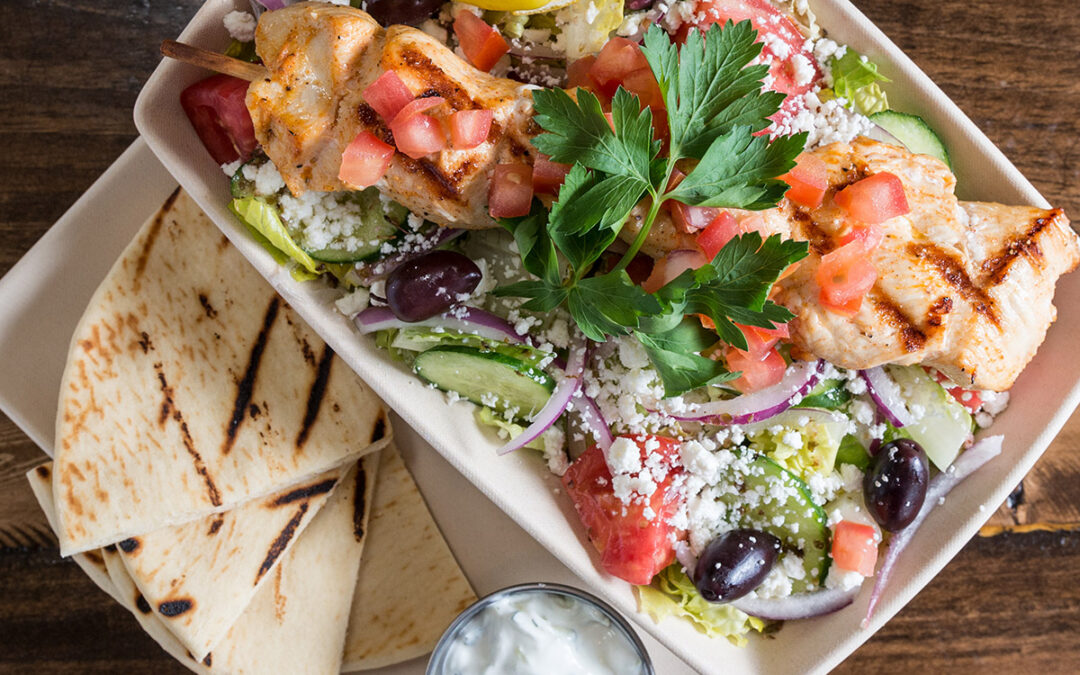
    The Great Greek’s menu covers the breadth of Greek cuisine from; gyros, souvlaki, pitas, bowls, salads, sides, and a full catering program. That depth keeps guests coming back with variety, and the catering program creates meaningful incremental revenue for franchisees beyond their dine-in traffic.
  • The infrastructure of a mature franchise system
    The Great Greek operates under United Franchise Group, one of the most established franchise development organizations in the world. That infrastructure, site selection support, operations training, marketing systems, supply chain relationships, and ongoing field support; is exactly what franchise investors need to execute well in a category that’s still early in its growth curve. 

A concept positioned ahead of where consumer preferences are heading

Fast casual investors who got into Mediterranean a decade ago made a good decision. Fast casual investors who get into the category now; with an established, franchisable brand and the support infrastructure to scale, are making a decision backed by a decade of consumer data pointing in one direction. 

The Mediterranean diet isn’t a trend. The consumer preference shift it represents is structural and durable. The fast casual franchise opportunity that shift has created is still early — and The Great Greek is built to capture it.

Ready to learn more about The Great Greek Grill franchise opportunity?

Request our investment overview or speak with our franchise development team to explore what’s available in your market.